There are times when people tell me they are going to have me out to their house for an energy audit once they get done with their existing projects. This comment always makes me wince because the best time to get an energy audit is before you make any changes to your house. One of the most cost effective ways to implement recommendations of an energy audit is to incorporate them into your existing plans. Many strategies can be easily done when you have full access to the area. Before finishing off the basement, closing up that wall, or insulating that attic, you will want to make sure you have incorporated energy efficiency and home performance measures at the same time.
It should be common practice to air seal an attic floor before upgrading insulation. It is also a good time to look at wiring, exhausts, and attic ventilation.
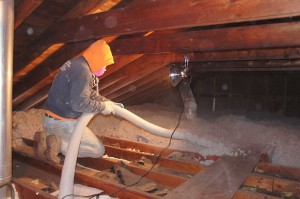
Upgrading the level of attic insulation. This is one of the most common and effective strategies for a home to become energy efficient and more comfortable. Once that new layer of insulation is in place, it is best not to disturb it. With that in mind, it is always best to take care of any repair work that involves the attic floor before your energy upgrade. This may include updating electrical wiring, adding exhaust fans, sealing and insulating duct work, repairing or sealing chimneys, and addressing attic ventilation. Because air leakage between the house and the attic can degrade the effective R-value of the insulation on the attic floor, it is always necessary to seal any penetration through the attic floor for an air tight barrier between the house and the attic.
Caulking, air sealing or replacing windows. If you are trying to seal up the air leakage in your house by caulking and sealing gaps and cracks, you may be doing yourself a disservice to your wallet. How can that be if the point it to save energy? A key piece of an energy audit it to perform a blower door test which quantifies the air leakage of the building. If you are participating in an energy upgrade project through the local utility to get money off the project, the blower door test is required before and after the air sealing / insulation installation. The larger the reduction of air leakage, the more money the program may pay out. For example, Ameren Illinois’ ActOnEnergy program helps eligible homes to lower the out-of-pocket expense for insulating attics, walls, and rim joists.
Adding insulation to walls. To properly insulate a home, you want to see an effective blanket around the home which would include the attic, exterior walls, and the basement. Insulating exterior walls effectively without leaving any traces takes craft of skill and depends on how easy it is to access. It usually involves drilling a hole from either the exterior or interior and pumping insulation into each cavity. From the exterior, some of the siding must be removed first and from the interior it means patching and painting drywall to repair the holes. If that wall is already open, the procedures are much simpler and can save you money on the installation.
Getting a new water heater and furnace. A good energy audit is going to include diagnostic testing of the furnace and water heater. It will address how efficiently it burns fuel and how effective the byproducts such as carbon monoxide are being vented from the house. You can have the most efficient furnace or air conditioner money can buy, but you can lose it if the air flow from the unit and duct work are poorly designed or leaking. Your energy audit report will generally include recommendations that will address how efficiently the unit is operating and features to look for when purchasing a new appliance.
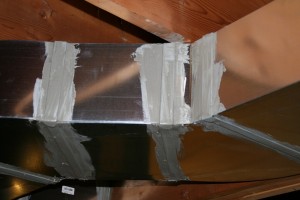
Before finishing off the basement ceiling, it is always good practice to make sure your ducts are sealed and and disconnects are addressed.
Finishing the basement ceiling. An audit will often find problems with duct work from the furnace. There may be disconnects, dampering, or general air leakage that need addressed. All of these are much simpler to repair when there is full access to the ducts.
Exhaust fans. An energy audit will address the performance of ventilation in the home. It is common to find that the flow of exhaust fans is too low for the space they are designed to ventilate. If you are modifying, replacing, or simply adding an exhaust fan where there wasn’t one before, that is a good piece of information to incorporate into the remodeling plan for your kitchen or bathroom. I often see exhaust fans in kitchens that were never properly vented to the outside or never installed at all.
Getting a new roof. The primary function of a roof is to effectively shed water away from the structure. When replacing a new roof, this is a great time to address proper ventilation of the attic beneath and to properly flash and seal any penetrations through it such as plumbing, electrical, or exhaust. A comprehensive energy audit is going to address attic ventilation and proper terminations of exhaust fans.
Lighting. When looking at lowering utility bills, one of the easiest and effective strategies is to replace inefficient bulbs with CFL or LED versions. However, there are options that can lower energy that go beyond the choice of the bulb. Some considerations may be to including controls such as timers, dimmers, occupancy sensors, and vacancy sensors to certain lighting fixtures. There may be areas of the home that can also benefit from different daylighting strategies to that you never have to flip a switch during the day.
As with many things in life, working with a plan helps projects get done smoothly and cost effectively. No one likes the feeling when you discover a better way after the fact and find yourself saying “If I only knew that before…” An effective energy audit is going to help you incorporate smart, energy-saving strategies into your existing plans for your home. It can help lower the cost of the installation and provide better results in the comfort of the home and the level of utility bills for the life of the home. It helps leave a legacy that will provides benefits for future generations.

