
The state of Illinois adopted the International Energy Conservation Code back in 2013. This code establishes minimum levels of energy efficiency for residential and commercial construction. This includes required levels of insulation of ceilings and walls, the relative air tightness of the building, window characteristics, and high efficiency lighting.
For more information about the Illinois Energy Conservation Code, see the Illinois Capital Development Board web site.
For a great resource on energy code interpretation, visit the Smart Energy Design Assistance Center at the University of Illinois at Urbana-Champaign or their free online training resource.

This test helps ensure the building is reasonably airtight which is arguably one of the most important steps in constructing an energy efficient home. To set up the building for the test, the windows and doors are shut, the exhaust fans are turned off, the mechanical systems are turned off, and the interior doors are opened. A fan is installed in an entry door with a cam-lock frame to close off the opening. The technician will turn on the fan to the required test pressure and measure the about of air moving through the fan to determine if the building meets or exceeds code requirements. The blower door operates at a test pressure of 50 pascals in residential buildings and 75 pascals in commercial buildings.
If the test passes, the technician will provide a blower door test report that can be given to the code inspector. If the test does not pass, the technician will use further diagnostics of the building to determine what steps will be needed in order to pass the test.
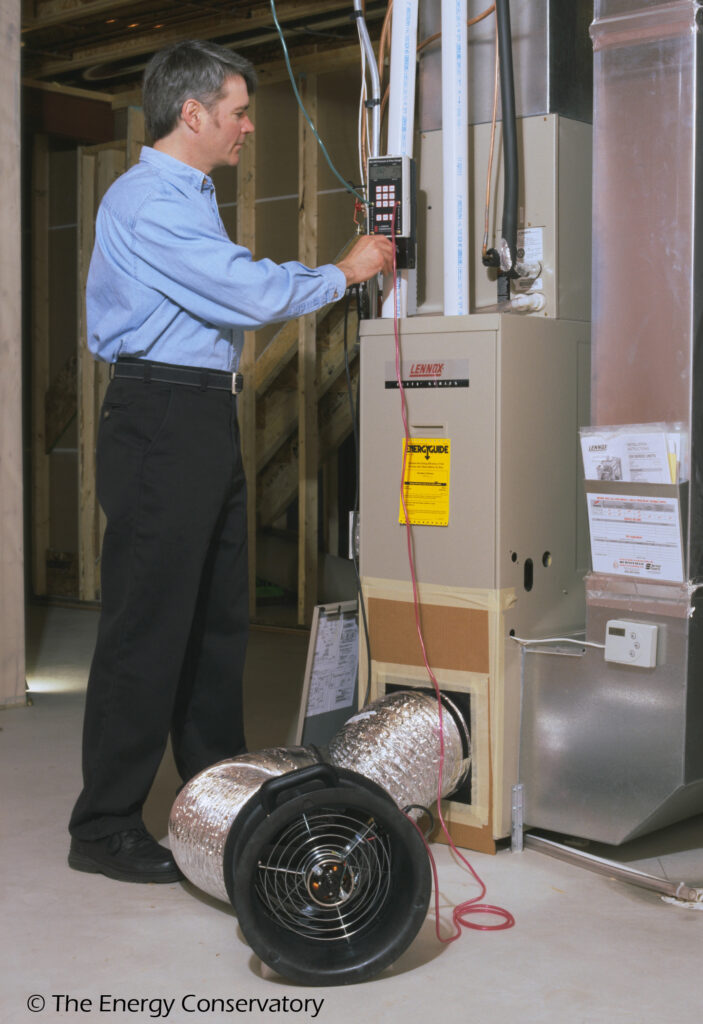
This is a method of determine how tight or how leaky the duct system is installed. The IECC requires all duct systems to be sealed with materials such as duct mastic or foil tape. The duct pressure test is used to calculated how tight the system is sealed.
To set up the test, the technician will tape off or block each supply and return opening through the system. They will then install a fan into the air handler or main plenum. The fan is turned on to run at a test pressure of 25 pascals (or 0.1 inch water column). The technician will compare the test result to the square footage of the are the system serves to determine if the system is within the limits defined in the code. If problems arise during the test, the technician will help diagnose locations of duct leakage and can re-test as the system is sealed. Because the code typically requires the test to be run by a 3rd party technician, the installing contractor is often on site during the test in order to address any issues that are found.
Once the system passes the code requirements, the technician will provide a duct leakage report that can be given to the code inspector.
We HIGHLY recommend having this test performed before drywall is installed so that you can access the ductwork to make corrections. When the test is done after the drywall is hung, it can be very difficult to address any issues.