
Take a deeper look at the system through performance testing.
In the heat of the summer, our air conditioning systems get quite a work out to keep us comfortable indoors. It almost goes without saying, a comfortable building at work can make us more productive in our jobs. The last thing we want at the end of the day is to come home to a house that is stuffy or humid. So, we depend on our air conditioning systems to provide comfortable indoor environments. In order to prevent a mechanical breakdown when we most need the system to work, it’s important to keep the system’s air filter changed and for an annual inspection to be done in the spring to make sure all of the components are functioning properly.
The condenser is the outdoor portion of the central air conditioning system.
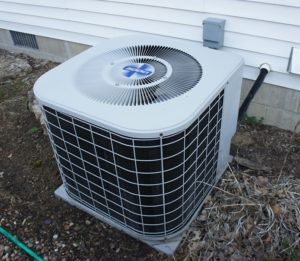
Let’s assume you starting noticing the air conditioner can’t keep up with your desired set temperature on the thermostat and you call a heating & cooling contractor for a service call. The technician will verify the air filter is cleaned and installed properly. They will also bring in their gauges and check the refrigerant charge to make sure the system isn’t leaking refrigerant. These are important steps to take, but they don’t always solve the problem, so a deeper look at the system is necessary to get to the root cause of the problem. As a third party energy consultant, comfort complaints are one of the most common reasons we are brought onto a job by the homeowner or contractor.
Common areas of a house that often don’t heat or cool properly include
Our job is to take a look at how the house functions as a system, perform diagnostic testing to provide real feedback on how the house is working, and make recommendations that will provide the biggest bang for the buck. We can show you many solutions that are possible and will help you determine which will make the most impact.
When it comes to evaluating air conditioning systems, here are some of the questions we will answer during the inspection:
The temperature coming out of the air conditioner into the ductwork is 53.5 degrees here.
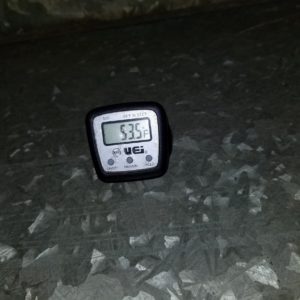
Taking a reading of the air temperature in both the supply side and return side of the ductwork is going to tell us a lot about how the system is performing. When the thermostat is set at 72 degrees and the room reaches 73 degrees, the system will turn on the air conditioner until the thermostat is satisfied. We expect the return air temperature through the ductwork into the air conditioner to generally be around 73 or 74 in this example. The air temperature coming out of the air conditioner on the supply side of the ductwork should have temperatures around 55 degrees. The difference in temperature would be 18 or 19 degrees which is an acceptable range based on the manufacturer’s specifications. When this temperature difference is too low, then we know there is a problems that need uncovered.
As air is flowing through your duct system, the ducts operate under pressure. This is called “static pressure” and is very similar to blood pressure in our own bodies. Doctors don’t want our blood pressure to be too high or too low otherwise they know there is a problem. It’s the same with measuring static pressure in the duct system as we don’t want it to be too high or too low otherwise there are going to be airflow problems. So, taking static pressure measurements during diagnostic tests is going to be highly critical to pointing to the cause of the problem. Common issues found with these measurements are poor air filter performance or installation, clogged evaporator coils, or duct design issues on the supply, return, or both sides of the system.
A vane anemometer is one of the tools that can be used to measure air flow at supplies and returns in each room.
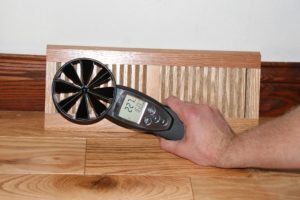
Some of the problems found during testing indicate a poor balance of airflow being delivered to each room. Air flow is typically measured in cubic feet per minute or CFM. If rooms on one side of the house are all getting measurements of 60 to 80 CFM of air while rooms on the opposite side of the house are only getting 30 to 40 CFM of air, then we know the system isn’t balanced properly. We take readings of each supply register and each return grille in order to map them to the layout of the house to help diagnose airflow issues related to balancing.
Well maintained air conditioners can last many years, but typically we are looking for about a 20 year expected lifespan. As the systems get older, it becomes more expensive to find replacement parts and more expensive to find replacement refrigerant that may no longer be manufactured. It is important to note that installing a brand new air conditioner may not solve the problem if the root cause remains unaddressed. For example, issues with ductwork design will not be corrected just by installing a new air conditioner.
By performing a software load calculation, we can determine the precise size of a system that is needed to serve the building. This includes looking at the square footage of the spaces in the building, attic insulation levels, wall insulation, window performance, window placement, shading around the exterior, ductwork installation, and the building’s orientation to the sun. Common sizes of air conditioners are generally 1.5 tons, 2.0 tons, 2.5 tons, 3.0 tons, 3.5 tons, 4.0 tons, and 5.0 tons. It is critical that the installed system is not too small and not too big. If systems are not sized correctly, you can have comfort problems, energy problems, and even indoor humidity problems.
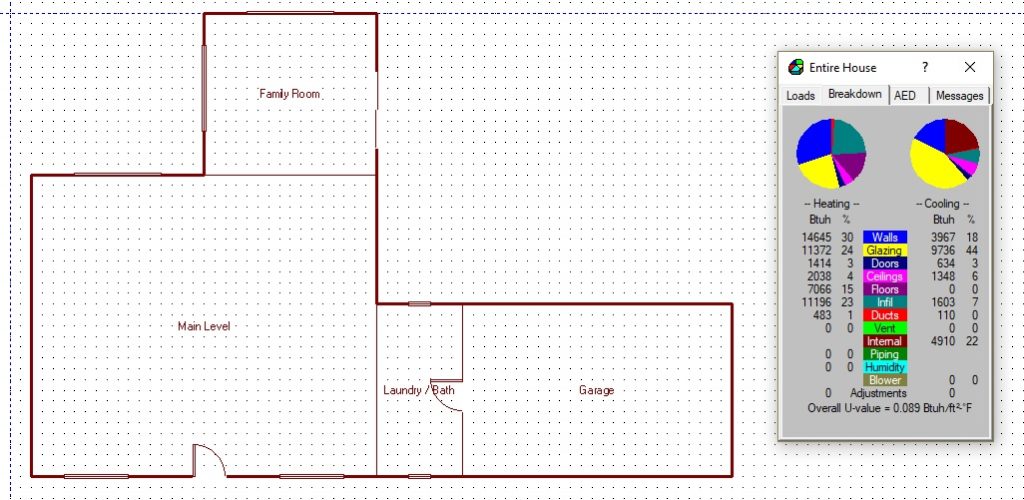
This is an example of a load calculation using Wrightsoft. The load meter on the right shows what elements of of the building are contributing to both the heating needs and cooling needs in a home that is pretty well insulated.
When insulation in the attic or walls is inadequate, missing, or not installed properly this is going to have a real impact on the comfort of one or more rooms of the building. Windows can also be an issue if they are single-pane (as opposed to double or triple paned), drafty, or are in direct view of the sun which can over-heat a room. The building shell should be airtight and well insulated in order to provide a comfortable and energy efficient home.
If you’d like to have a deeper look at your cooling system to evaluate it’s performance, give us a call! We can perform a comprehensive energy audit to cover all systems in the home or building impacting energy and comfort, or we can come in for a shorter inspection to just focus on cooling issues without the in depth look at the shell of the building.
Call (309) 253-2242 today!


