Before You Upgrade Your Furnace or Air Conditioner…
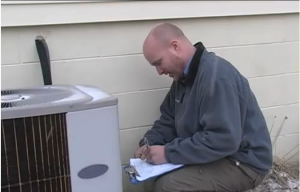
Todd is inspecting the air conditioner as part of his energy audit so he can make recommendations in the report.
When it comes to replacing furnaces or air conditioners, the decision is often made in a pinch because it just broke down in the middle of when you need it most—the freezing cold of the winter or the sweltering heat of the summer. The main priority at that point is to replace the HVAC (heating, ventilation, and air conditioning) unit as quickly as possible. Unfortunately, little thought is given to the features that can improve the performance and energy efficiency of the home.
By having a replacement strategy in place for your furnace or air conditioner, you can make smart decisions when the time comes. One of the many benefits of a home energy audit is to identify deficiencies in the system and make recommendations to maximize the efficiency.
Some common opportunities found during the performance testing of an energy audit include air flow issues through the system, duct design, blower speed, and the size of the system doesn’t meet the demand of the house.
Things to Consider Before Replacing Your HVAC Unit
Size matters. Your contractor should do a load calculation on the house in order to properly size the furnace so that you get real efficiency in performance instead of just the nameplate. The contractor should be calculating R-values of insulation in walls and the attic, checking for U-factors of windows, measuring the house, etc. If the contractor seems unwilling or you want to get a third party verification, you can hire an energy consultant (such as our consultants at EverGreen) to do these calculations for you.
This furnace has a 1″ air filter slot. Ideally this would have been upgraded to a 5″ box media with the new furnace.
The building envelope should come first. If you are going to upgrade the insulation or replace the windows in the house, the best time to do it is before you have to purchase a new furnace so the size can match the home after the upgrades are done. HVAC systems are sized to meet the demand of the house, so these items are best addressed before system replacement becomes necessary.
Don’t settle for the 1″ air filter. If you have a 1″ thick air filter, this is going to restrict air flow through the furnace and cause you to lose efficiencies and potentially cause premature mechanical failure. It is important to note that while air filters help keep the indoor air clean they also protect the equipment and prolong the working life of the unit. Upgrade the old 1″ filter with 5″ box media filter instead to improve performance.
Duct work matters. I absolutely cannot understate how important ducts are to the efficiency of the system. The best way to tell how well they work is through performance testing such as temperature rise/drop and total external static pressure. The readings should fall within the manufacturer’s design specifications. They will tell you if you are getting enough air on the return side, if you have issues with the filter or A-coil (from the air conditioner), or even if the blower speed is not set correctly. Performance testing of ductwork is like taking blood pressure at the doctor’s office. Much like high blood pressure and low blood pressure indicate problems with people, pressure testing of ductwork can indicate problems and lost efficiencies with your system.
Go with multiple stages. You will gain efficiencies if you go with a 2-stage or 3-stage unit that can better meet the immediate need for the building. A single stage furnace will only run at one “stage” which is the rated BTU of the unit. For example, Todd replaced his single stage 100,000 BTU furnace with a three stage unit that runs at 30,000 BTUS most of the time. The new furnace uses less energy while providing better comfort. (Of course, it is sized for the home as well).
There are just a few of the considerations that impact the performance and efficiency of your furnace or air conditioner. You can also consider variable speed blowers, ECM motors, and wi-fi enabled thermostats. The bottom line is that putting the strategy in place now will save you from making a rash decision in the future.
Will an Energy Audit Identify Other Issues You Should Address Before Getting a New Furnace or Air Conditioner?
Call (309) 253-2242 or email us for a free consultation to determine how you’ll benefit from an energy audit.